Peptide Scalp Care — How Targeted Amino Acid Signals Support Hair Density

Part of: Hair Density Science Hub
By Dr. Susan Lin, M.D. — Reviewed May 2026.
The short answer
Peptides are short chains of amino acids (typically 2-50 amino acids) that act as cellular messengers. In hair care, specific peptides support scalp microcirculation, follicle anchoring, and the appearance of fuller, healthier-looking hair — without hormonal or pharmaceutical action. Because peptides work at the cellular signaling level, they are safe across pregnancy, breastfeeding, and long-term use, and have no contraindication with HRT or other medications. The MD Hair system uses three peptide technologies: StimuCap® (in shampoo/conditioner), Biotinoyl Tripeptide-1 (in MD Follicle Energizer), and Acetyl Tetrapeptide-3 (in MD Follicle Activator). This guide explains what each does and why peptide-based scalp care is the foundation of drug-free density support.
What is a peptide?
A peptide is a short chain of amino acids — the same building blocks that make up proteins. Where proteins are large (often hundreds of amino acids), peptides are small, targeted signals (2-50 amino acids). This smaller size lets them be more easily absorbed and act on specific receptors or pathways.
In skincare and haircare, synthesized peptides can mimic natural signaling molecules — telling cells to make more collagen, increase microcirculation, anchor a follicle, or repair damage. They do not act as hormones, drugs, or steroids. They act as biological messengers.
The 3 peptide technologies in the MD Hair system
1. StimuCap® — in MD Revitalizing Treatment Shampoo & Conditioner
StimuCap® is a proprietary blend of three components:
- CLA (Conjugated Linoleic Acid) — anti-inflammatory fatty acid that supports scalp barrier and reduces oxidative damage
- Glutathione — the body's master antioxidant; neutralizes free radicals at the follicle
- Sodium DNA — supports cellular repair and the appearance of fuller, denser hair
Found in MD Revitalizing Treatment Shampoo and Conditioner. Because StimuCap® is in both wash and condition steps, peptide delivery is continuous.
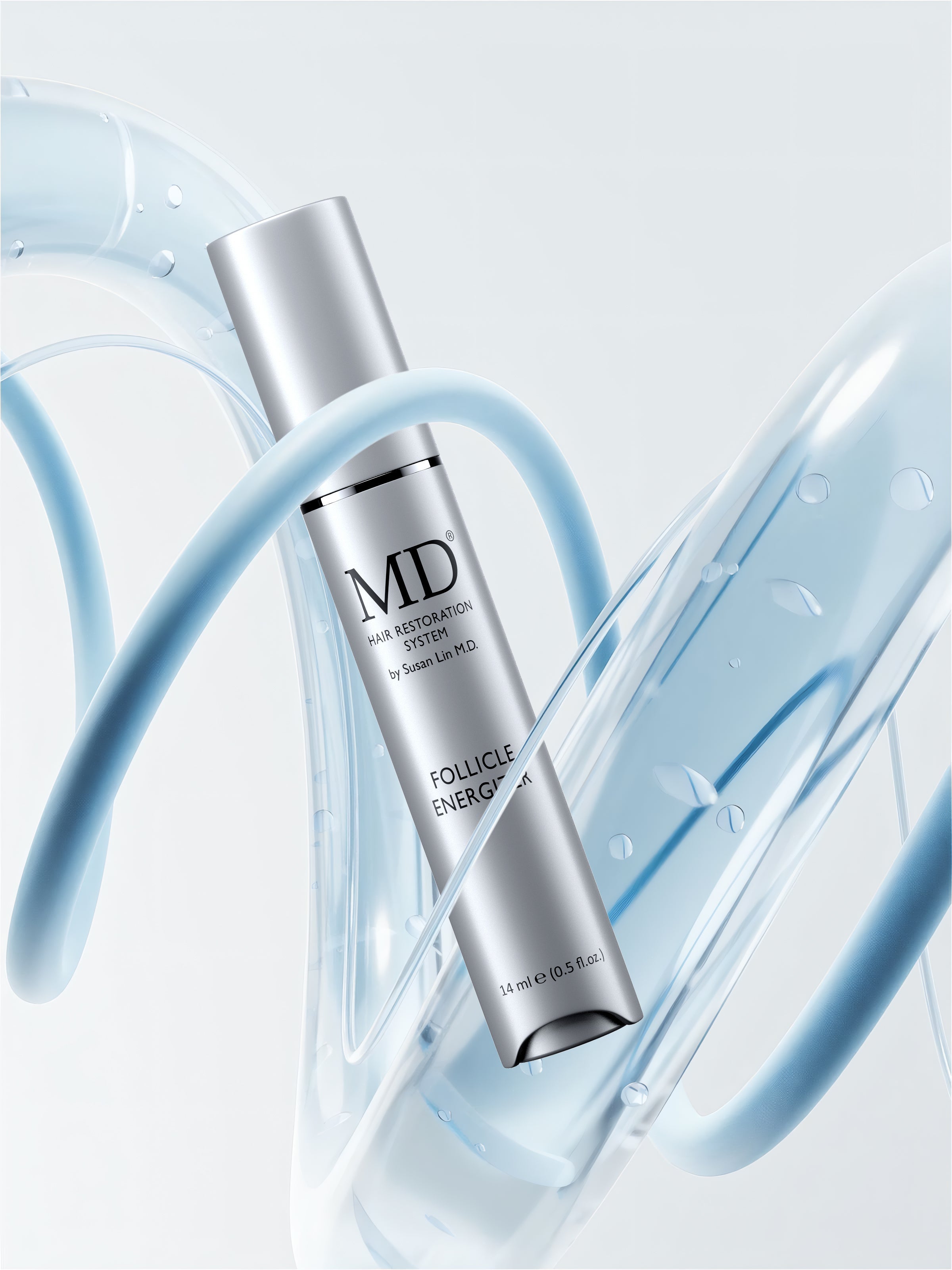
2. Biotinoyl Tripeptide-1 — in MD Follicle Energizer
Biotinoyl Tripeptide-1 is a tripeptide (three amino acids) anchored to a biotin molecule. The biotin anchor improves skin/scalp absorption; the tripeptide signals support follicle nutrition. Found in MD Follicle Energizer alongside saw palmetto (DHT modulation) and marine botanicals.
3. Acetyl Tetrapeptide-3 — in MD Follicle Activator
Acetyl Tetrapeptide-3 is a four-amino-acid signal that supports follicle anchoring in the scalp — important because miniaturizing follicles are at risk of dropping permanently. Found in MD Follicle Activator alongside Red Clover Extract, Niacinamide, Panthenol, and Ergothioneine for scalp microcirculation and oxidative defense.
Why peptides instead of drugs?
| Feature | Peptides | Minoxidil | Finasteride |
|---|---|---|---|
| Pregnancy safe | Yes | Not established | Contraindicated (teratogenic) |
| Breastfeeding safe | Yes | Not established | Contraindicated |
| Required ongoing use | Recommended (cosmetic effect) | Yes | Yes |
| Common side effects | Rare / mild | Irritation, facial hair growth | Hormonal side effects |
How to use peptide scalp care
- Wash with MD Revitalizing Treatment Shampoo (StimuCap®)
- Condition with MD Revitalizing Treatment Conditioner (StimuCap®)
- Apply MD Follicle Energizer (Biotinoyl Tripeptide-1) or MD Follicle Activator (Acetyl Tetrapeptide-3) to towel-dried scalp
- Massage gently for 60 seconds to support microcirculation and absorption
- Be consistent daily — peptide signaling effects accumulate over 3-6 months
Frequently asked questions
Q: How long until peptides show results?
A: Most users notice less shedding within 4-6 weeks. Visible density changes typically appear by 3-6 months — one complete follicle cycle.
Q: Are peptides safe during pregnancy and breastfeeding?
A: Yes — MD Hair peptide products are drug-free, hormone-free, and have no known contraindications for pregnancy or breastfeeding.
Q: Can peptides be combined with prescription hair treatments?
A: Yes — peptides work through cellular signaling pathways distinct from minoxidil or finasteride and can be combined under physician supervision.
Related reading
Featured products
Educational only; not a substitute for individualized medical advice.