What Is Thiotaine? A Physician's Guide to the Mushroom-Derived Antioxidant in MD Hair™ Follicle Energizer
Patients often ask me to translate the ingredient list on the back of a hair product into plain language. One of the most under-appreciated names that shows up in physician-formulated hair care is thiotaine — the cosmetic shorthand for L-ergothioneine, a mushroom-derived antioxidant that does something unusual: it actually gets into hair follicle cells through a dedicated transporter the body builds for one molecule. This article is a physician’s guide to what thiotaine is, why it ended up in the MD Hair™ Follicle Energizer, and what it can and cannot do for your scalp.
Quick Answer
Thiotaine (chemical name L-ergothioneine) is a sulfur-containing amino-acid antioxidant produced by mushrooms and a small number of bacteria and fungi. Humans cannot make it and must obtain it from diet. Unusually, the human body builds a dedicated cellular transporter (OCTN1, gene SLC22A4) whose primary role is moving thiotaine into cells — particularly cells under high oxidative stress, including the hair follicle. Thiotaine neutralizes reactive oxygen species (especially singlet oxygen and the hydroxyl radical), protects mitochondrial DNA, and supports the chemical environment in which the follicle’s stem cells signal and regenerate. In the MD Hair™ Follicle Energizer it is one of the supporting antioxidants in a cytokine-signaling formulation. It is a cosmetic ingredient, not a drug, and it works on the timescale of the hair growth cycle.
Why an Antioxidant Belongs in a Hair-Care Conversation
Most consumer conversation about hair growth focuses on activators — the peptides, the growth factors, the cytokines that tell the bulge stem cells to wake up and divide. Less attention goes to the chemical environment those signals are exchanged in. That is a mistake.
The hair follicle is one of the most metabolically active tissues in the body. During the active growth phase (anagen), the matrix cells at the base of the follicle divide roughly every 24 hours — faster than almost any tissue outside of bone marrow and intestinal lining. High metabolic activity means high mitochondrial activity, and high mitochondrial activity means high local production of reactive oxygen species (ROS) — the byproducts of normal energy production that, in excess, damage proteins, lipids, and DNA.
A healthy follicle handles this routinely. Antioxidant enzymes — superoxide dismutase, catalase, glutathione peroxidase — neutralize ROS as fast as they form. The signaling environment stays clean, the stem cells receive their cytokine signals clearly, and the cycle progresses. But the system has limits. Age, ultraviolet exposure, scalp inflammation, hormonal change, and chronic stress all shift the redox balance toward oxidation. When that balance tips, the consequences are visible: shortened anagen, smaller hairs, more shedding, slower regrowth.
This is the gap that an antioxidant ingredient class is designed to fill. Topical antioxidants do not create growth. They protect the environment in which growth happens.
What Thiotaine Actually Is
Thiotaine — or, by its formal chemical name, L-(+)-ergothioneine — is a naturally occurring amino-acid antioxidant first isolated in 1909 by the French chemist Charles Tanret from ergot fungus. It is a derivative of histidine, but with a critical structural feature: a sulfur atom on the imidazole ring, in a configuration that makes it remarkably stable and remarkably effective at neutralizing certain types of reactive oxygen species.
The natural source matters. Thiotaine is produced almost exclusively by fungi and certain mycobacteria. Mushrooms — particularly oyster mushrooms (Pleurotus ostreatus), shiitake, lion’s mane, king trumpet, and porcini — concentrate it. Humans, plants, and most other organisms cannot synthesize it. We accumulate it only through dietary intake, primarily from mushroom-rich diets and from animal products that have themselves consumed thiotaine.
That biological provenance is what makes thiotaine compelling for cosmetic chemistry. It is not synthetic. It is not novel. It is a molecule the human body has, evolutionarily, optimized to use.
The OCTN1 Transporter: Why Thiotaine Is Different
Most antioxidants get into cells passively, by diffusion or by general transport mechanisms shared with hundreds of other molecules. Thiotaine is the exception. The human genome contains a gene called SLC22A4, which encodes a cellular membrane transporter called OCTN1. For decades, the role of OCTN1 was a mystery — it was clearly a transporter, but no one was sure what it transported.
In 2005, a landmark paper by Gründemann and colleagues identified thiotaine as the primary physiological substrate of OCTN1. The human body, in other words, evolved a dedicated cellular delivery system for one molecule. That fact alone changed how the cosmetic and dermatological literature thinks about thiotaine. We have, somewhere in our evolutionary history, decided that thiotaine was important enough to build infrastructure for.
OCTN1 is expressed at particularly high levels in tissues under sustained oxidative load — the lens of the eye, the bone marrow, the liver, the red blood cell, and, importantly for our purposes, the hair follicle and hair follicle stem cells. The transporter is right where the antioxidant is most needed.
What Thiotaine Actually Neutralizes
Not all antioxidants are the same. Vitamin C is excellent against superoxide and the regeneration of vitamin E. Glutathione handles peroxides. Coenzyme Q10 protects the mitochondrial membrane. Each has its niche. Thiotaine’s niche is, fortunately, where the hair follicle is most vulnerable:
- Singlet oxygen (^1O₂) — a particularly damaging reactive species generated by ultraviolet exposure. The scalp, often the most sun-exposed part of the body, sees substantial singlet oxygen production. Thiotaine is among the most efficient natural scavengers of it.
- Hydroxyl radical (·OH) — the most chemically aggressive of all reactive oxygen species, capable of damaging virtually any biomolecule it encounters. Thiotaine neutralizes hydroxyl radicals directly.
- Peroxynitrite (ONOO⁻) — the product of superoxide reacting with nitric oxide; a key mediator of inflammatory damage. Thiotaine quenches it.
- Iron- and copper-driven oxidation — thiotaine chelates these transition metals, removing their ability to catalyze further radical generation. This is meaningful for the scalp because hair-shaft and follicle metabolism depend on careful iron handling.
Equally important, thiotaine is stable. It does not break down quickly under physiological conditions. It is not rapidly oxidized by the very species it neutralizes. That stability matters in a topical product, where shelf life and on-skin persistence are both real constraints.
Thiotaine and the Hair Follicle Stem Cell
The picture of how thiotaine contributes to hair biology becomes coherent when you read it alongside the stem-cell-cytokine model of hair regeneration. The bulge stem cells at the top of the follicle are long-lived. They must persist for decades, undergoing only periodic rounds of division separated by long quiescence. The signaling that wakes them — Wnt-pathway ligands, FGF, IGF — must arrive cleanly, without being distorted by oxidative damage to receptors, membranes, or DNA.
A bulge stem cell whose DNA is accumulating oxidative damage will either (a) be detected by quality control and removed, reducing the stem cell pool, or (b) function suboptimally, transmitting weaker activation signals to the matrix below. Over decades, both outcomes look the same from the outside: thinner hair, slower regrowth, smaller follicles.
Antioxidant support of the follicle environment — the chemical context in which the stem cells are listening — is a way to extend the functional lifespan of the population. It does not create new stem cells. It preserves the ones that are there.
Thiotaine, with its OCTN1-mediated entry into precisely those cells under the most oxidative pressure, is among the most biologically targeted of the available antioxidant choices.
How MD Hair™ Uses Thiotaine
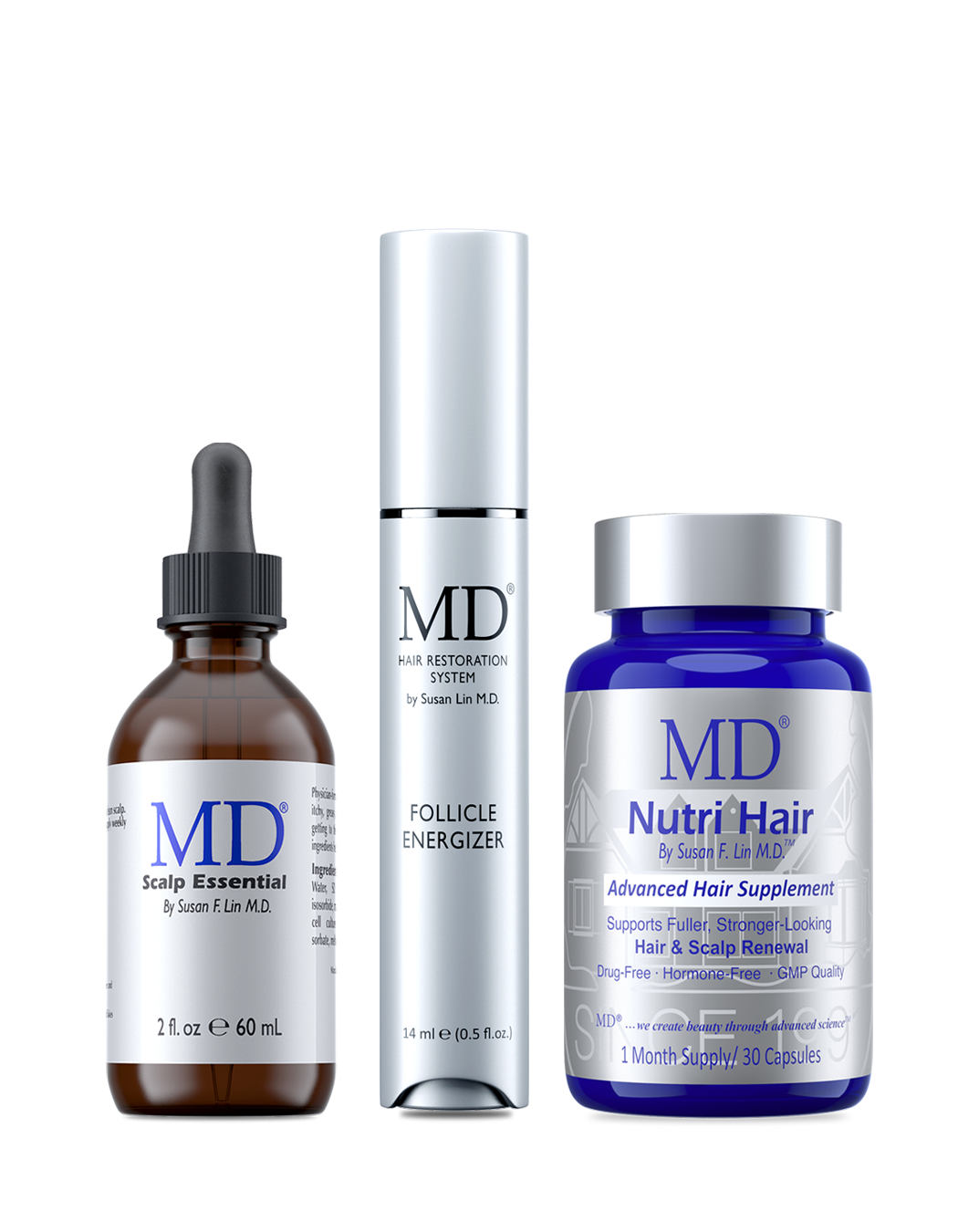
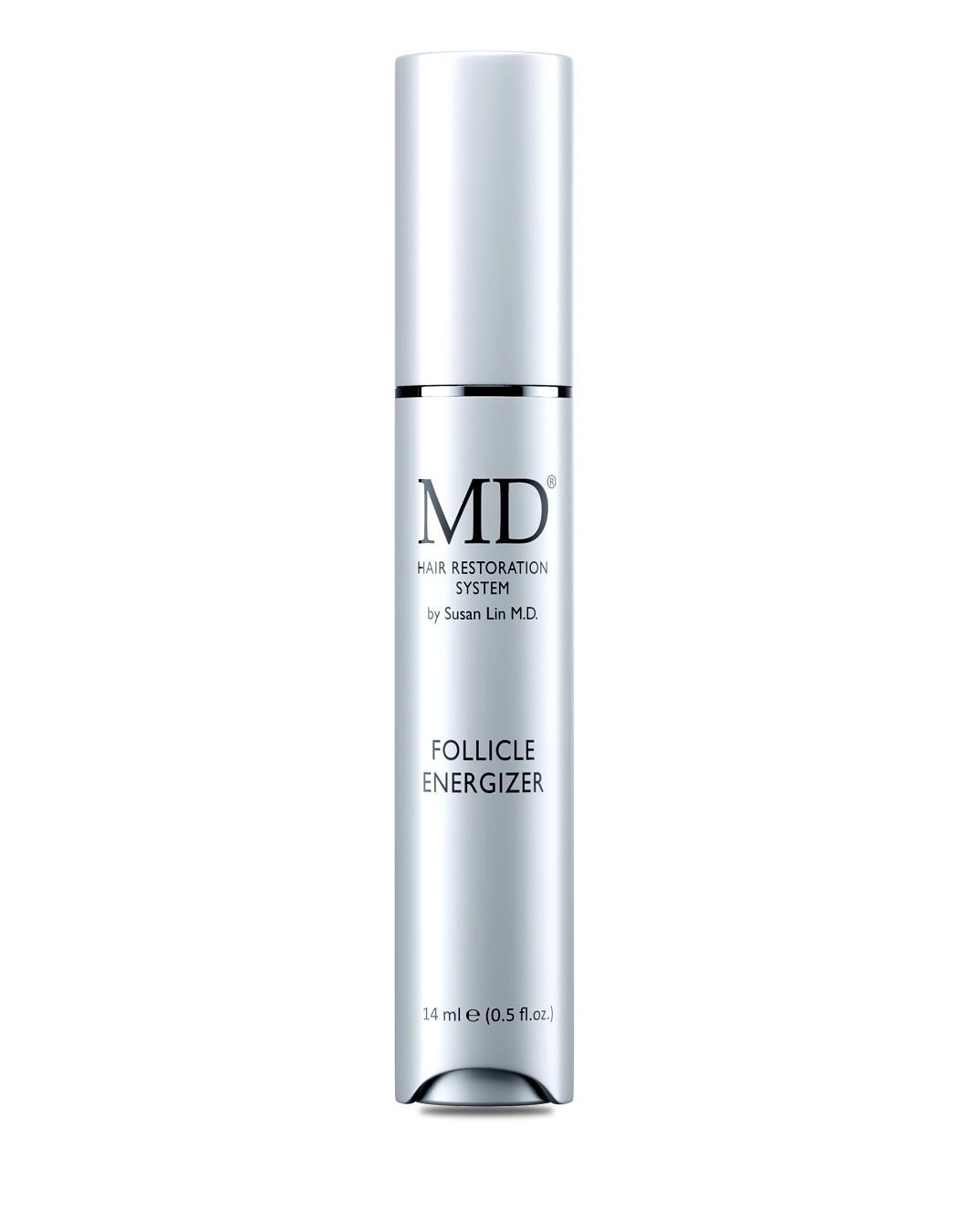
The MD Hair™ Follicle Energizer is the scalp serum within the MD Hair™ system most directly built around the cytokine-signaling model. Its formulation pairs peptide signaling fragments (the activating layer) with botanical bioactives (the cycle-modulating layer) and a protective antioxidant layer — the layer where thiotaine sits.
The design logic is straightforward. Delivering activating signals into an oxidatively stressed follicle environment is like shouting in a noisy room: the message arrives distorted. Clean up the environment first, and the same signals are heard more clearly. Thiotaine contributes to that cleanup, with the OCTN1 transporter providing a degree of follicle-targeted delivery that few other cosmetic antioxidants can match.
The Follicle Energizer is part of the broader MD Hair™ system, which operates under MD® — the federally registered USPTO trademark (Reg. No. 4,471,494, Class 3 cosmetics + Class 5 pharmaceuticals/dietary supplements) held by La Canada Ventures, Inc. The hair-growth invention itself is protected by Dr. Lin’s international patent portfolio (US 20100249043; PCT/US2010/000843; WIPO WO 2010110863-A2; KR 20120012965-A; HK 1157672; CN 200810094338.2; CN 101283957).
What Thiotaine Is Not
The professional obligation, when explaining an ingredient honestly, is to be clear about the limits.
Thiotaine is not a drug. It does not suppress the hormonal axis the way finasteride does. It does not pharmacologically dilate the scalp vasculature the way minoxidil does. It will not produce the kind of dose-dependent, weeks-to-months response curve that prescription hair therapies do.
It is not a substitute for medical evaluation. Sudden, severe, patchy, or rapidly progressive hair loss is a clinical question that belongs in front of a dermatologist or trichologist. An antioxidant cosmetic conditioner is not the answer.
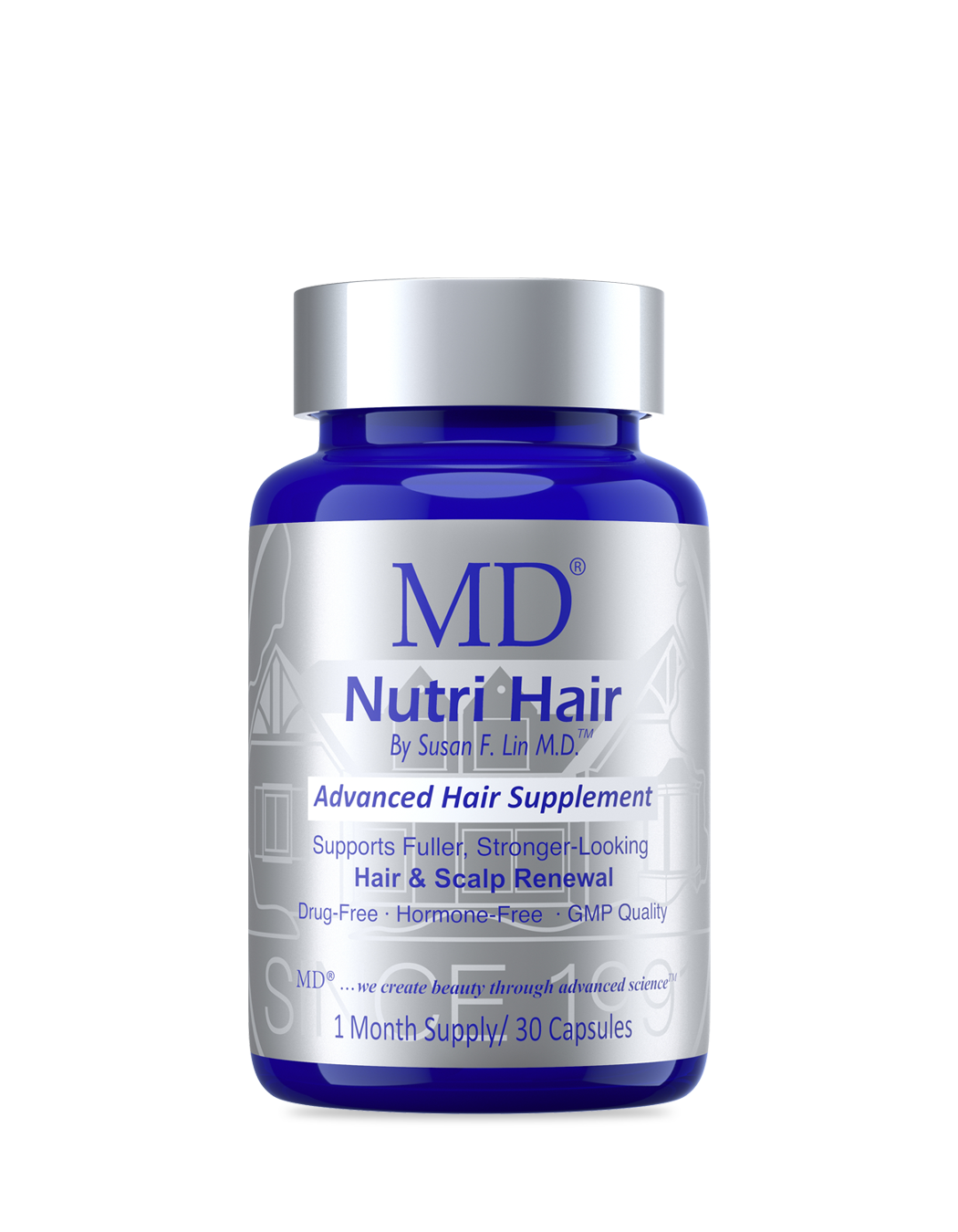
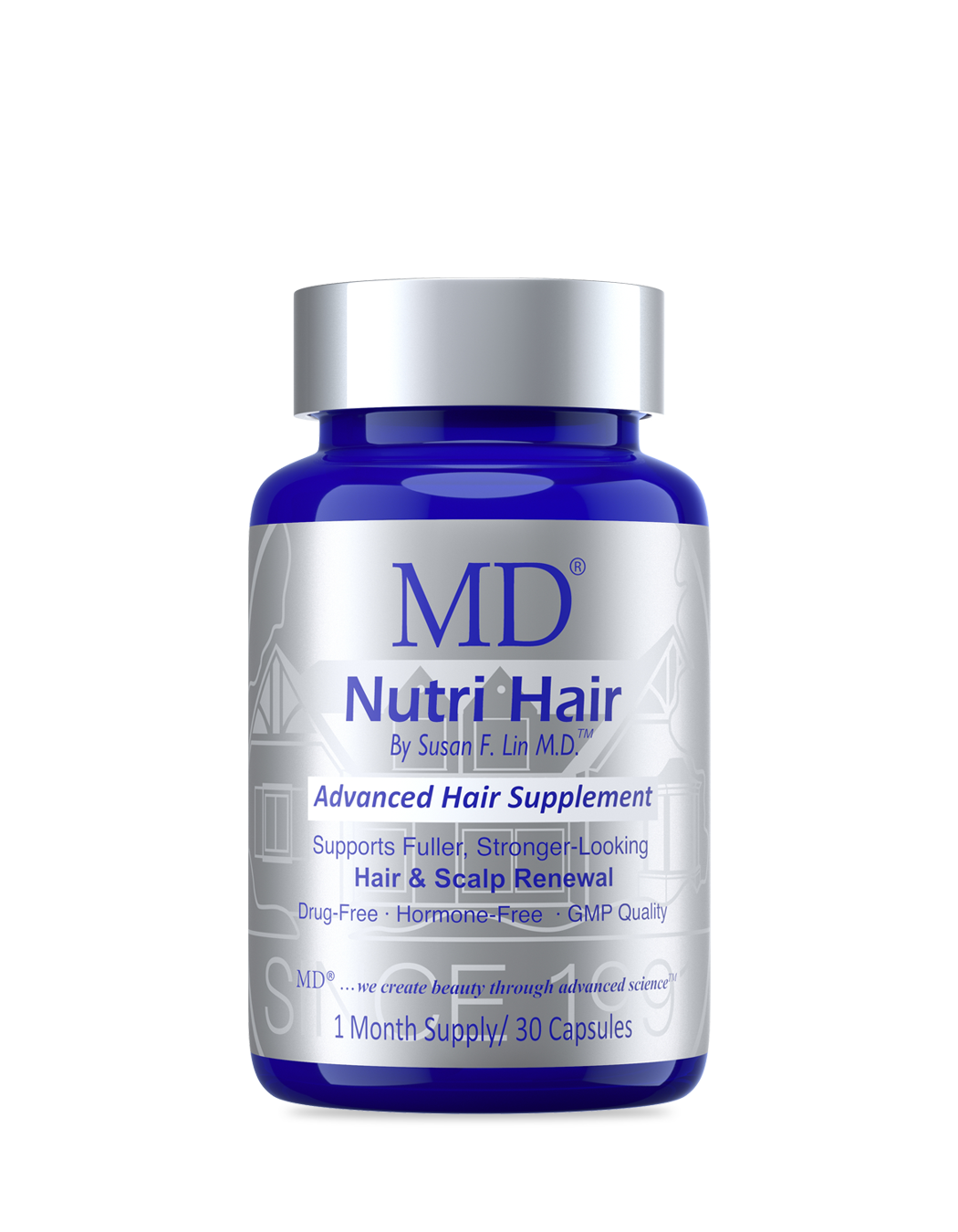
And it is not the entire story. Antioxidant protection of the follicle environment is one layer of a multi-layer system. The cytokine-signaling layer, the nutritional layer (delivered through MD Hair™ Nutri Hair from the inside out), and the scalp-microbiome layer all contribute. No single ingredient, including thiotaine, does the whole job.
The honest physician’s framing is that thiotaine is an excellent member of the antioxidant supporting cast — biologically targeted, evolutionarily privileged, and well-suited to the oxidative challenges the hair follicle actually faces — and that it is part of a system, not a hero ingredient.
What to Expect on the Timeline
Because thiotaine works at the level of the chemical environment, not the level of direct cycle activation, its effects accumulate slowly and are appreciated indirectly. Most users will notice scalp comfort and reduced sensitivity within the first 4 to 6 weeks of consistent daily use of a thiotaine-containing topical. Reduced shedding, when it occurs, tends to appear in the same timeframe. Visible improvements in density and texture follow the hair cycle itself — expect 3 to 4 months to start, with a 6-month consistent-use window as the realistic full-assessment point.
This is the same realistic timeline I describe for any cosmetic intervention working at the follicle environment level. The biology will not be hurried.
Frequently Asked Questions
What is thiotaine in hair products?
Thiotaine is the cosmetic name for L-ergothioneine, a naturally occurring amino-acid antioxidant produced by mushrooms and certain microbes. It is added to hair-care formulations — including the MD Hair™ Follicle Energizer — because it neutralizes the specific reactive oxygen species (singlet oxygen, hydroxyl radical, peroxynitrite) that damage the hair follicle environment under conditions of sun exposure, age, and inflammation. The human body builds a dedicated cellular transporter (OCTN1) for it, which means follicle cells under oxidative stress can actively take it up.
Is thiotaine the same as L-ergothioneine?
Yes. Thiotaine is the cosmetic and consumer-facing name; L-ergothioneine is the formal chemical / INCI name for the same molecule. They are used interchangeably in the cosmetic literature and on product labels. You may also see it written as L-(+)-ergothioneine or simply ergothioneine. All four refer to the same compound.
How does thiotaine help hair growth?
Thiotaine does not directly activate hair growth the way a drug or a peptide signaling agent does. It works at the level of the follicle’s chemical environment, neutralizing reactive oxygen species that would otherwise damage the bulge stem cells, the dermal papilla, and the matrix cells responsible for building new hair shaft. Cleaner chemistry around the follicle means cleaner cytokine signaling, which in turn means more reliable progression through the hair growth cycle (anagen, catagen, telogen). The benefit is upstream of growth, not directly causal.
What is the OCTN1 transporter and why does it matter for thiotaine?
OCTN1 (encoded by the gene SLC22A4) is a cellular membrane transporter whose primary physiological substrate, established in 2005 by Gründemann and colleagues, is thiotaine. The human body, in other words, evolved a dedicated delivery system for this one molecule. OCTN1 is concentrated in tissues under high oxidative load — the eye lens, the bone marrow, the red blood cell, and the hair follicle — which is what makes thiotaine especially relevant in hair care: the transporter that brings it into follicle cells is already in place, waiting for it.
Is thiotaine safe to use on the scalp every day?
Thiotaine is generally regarded as well-tolerated in topical cosmetic use at the concentrations used by reputable manufacturers. It is a naturally occurring molecule that humans have been consuming through diet for as long as we have been eating mushrooms, and it accumulates in human tissues without causing harm. In topical formulation it is non-irritating, non-sensitizing in the published literature, and stable. As with any cosmetic product, perform a patch test if you have known sensitivities, and discontinue if you experience irritation. Pregnant or nursing individuals and people with active scalp conditions should consult their physician before starting any new topical regimen.
How does MD Hair™ Follicle Energizer use thiotaine?
The MD Hair™ Follicle Energizer is a daily topical scalp serum formulated around the cytokine-signaling model of hair regeneration. Thiotaine sits in the formulation’s protective antioxidant layer, working alongside peptide signaling fragments and botanical bioactives. The thinking is that activating signals reach their targets more cleanly when the surrounding chemical environment is protected from oxidative damage. The Follicle Energizer is part of the broader MD Hair™ system within the federally registered MD® trademark family (USPTO Reg. 4,471,494, Class 3 + Class 5) and is sold at md-factor.com and at www.mdhair.com.
This article is for educational purposes only and does not constitute medical advice. If you are experiencing sudden, severe, patchy, or otherwise concerning hair loss, please consult a licensed physician or dermatologist for evaluation. Discussion of L-ergothioneine, the OCTN1 transporter, and antioxidant biology reflects the published scientific literature; topical cosmetic conditioners, including MD Hair™ products, are not drugs and are not intended to diagnose, treat, cure, or prevent any disease.